Mapping Our Communities (Week 3)
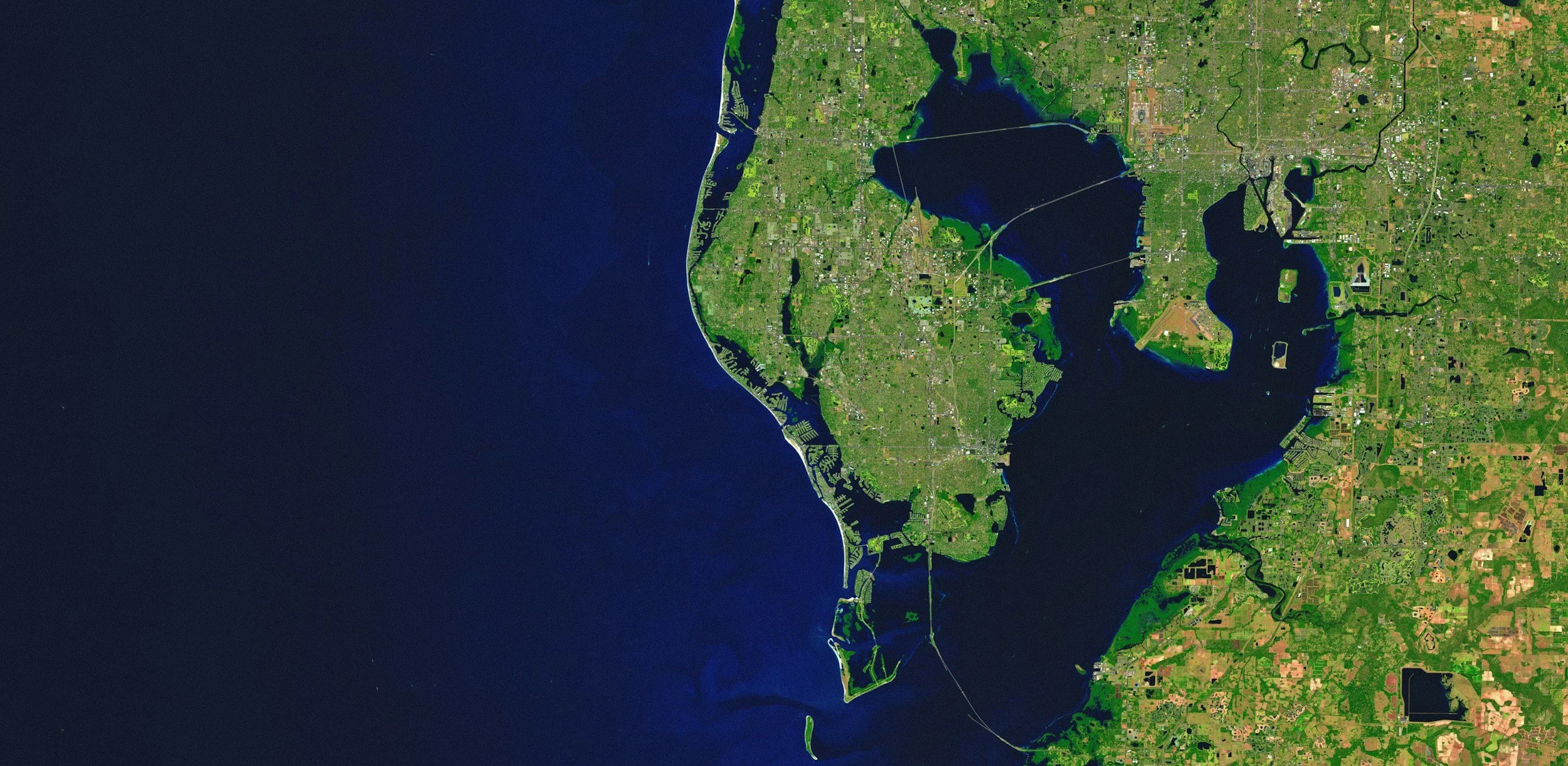
When I first embarked on the journey of finding a way to improve sustainable livability within our community, I decided to leverage map and data reconnaissance as a strategy to pinpoint localities with high concentrations of homeless populations. Specifically searching for watershed and flood zone areas that are prone to disasters during hurricane season, I aimed for these unhoused populations first as they are most at risk when rough waters rush over our shores. Interestingly, what I found was a clear gap that will be a quick win for sustainable urban planners in Tampa Bay:
Tampa Bay has extensive data and mapping resources that can be harnessed to analyze needs and opportunities. The City of Tampa maintains a robust GIS department and open-data portal, and regional groups like the Tampa Bay Partnership have previously developed GIS asset maps of local industries and workforce. Despite this, service providers and residents often lack an integrated view of community assets (shelters, parks, clinics, etc.) and needs (homeless encampments, food deserts, transit gaps).
For example, the Tampa Hillsborough Homeless Initiative emphasizes that “knowing where people are located and understanding the scope of homelessness locally directly impacts the community’s ability to respond”. An asset mapping approach would inventory both social and physical assets: nonprofits, community gardens, parks, transit stops, and social services.
By overlaying these with data on homelessness, poverty, and environmental conditions, stakeholders can identify service gaps and avoid duplication. In practice, this could mean using Tampa’s GeoHub and open-data platforms to create an interactive map of support centers, shaded by need. Such a map (like the Tampa Bay Partnership’s industry asset maps) would be a powerful coordination tool, allowing citizens, nonprofits, and city agencies to share information and target resources where they are most needed.
Resources: Tampa Hillsborough Homeless Initiative; City of Tampa GeoHub; Tampa Bay Partnership